Paint Correction
What is Paint Correction?
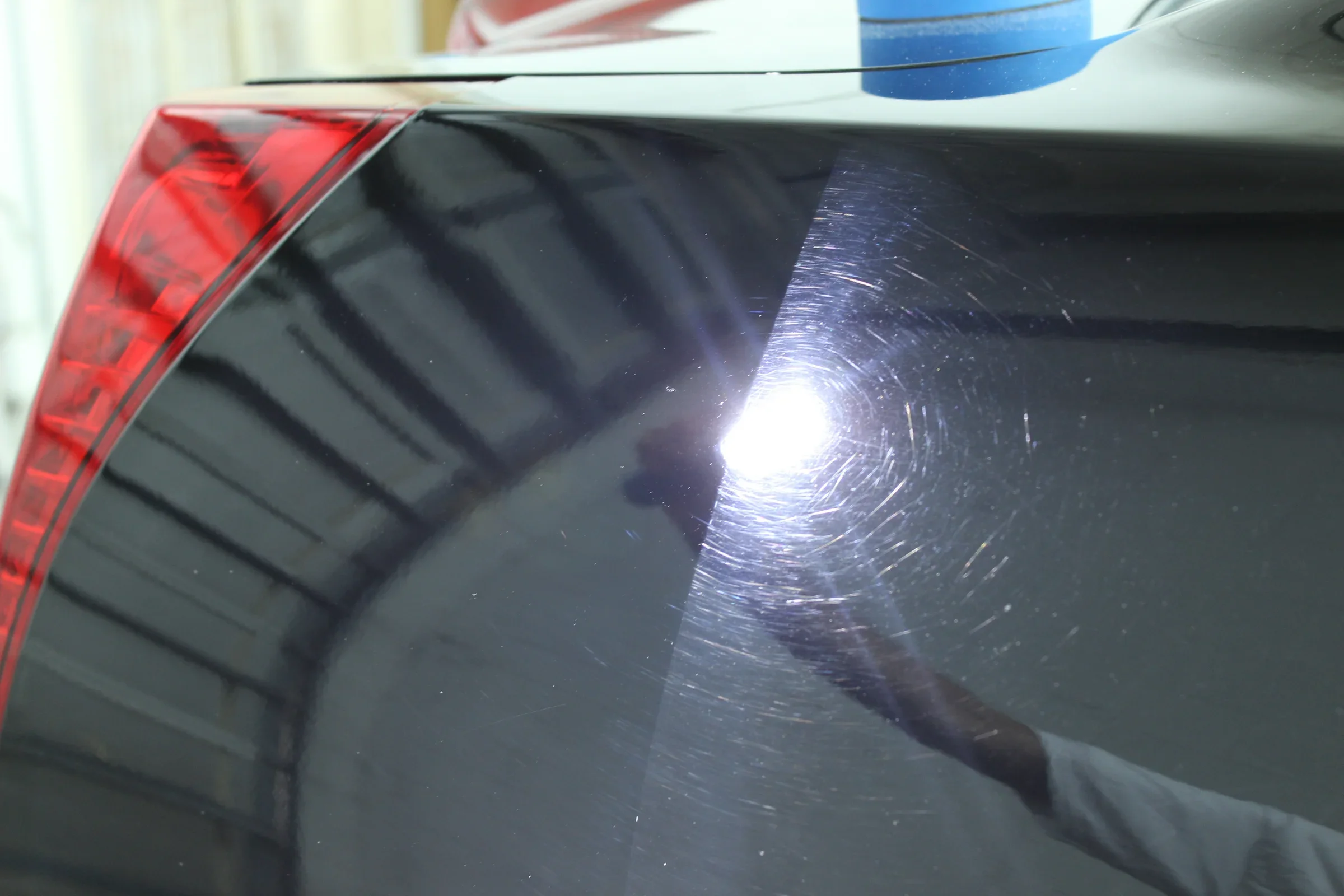
It’s the mechanical process of permanently restoring and rejuvenating the paintwork of a vehicle. It removes imperfections trapped in the clear coat—such as swirl marks, scratches, water spots, oxidation, and bird dropping etching, rather than just filling them in. By leveling the microscopic peaks and valleys of the clear coat, a professional paint correction brings back a deep, mirror-like gloss and clarity.
(Service Billed At Hourly Rate Based on $60/Shop-Hour)
Polishing vs. Paint Correction
Here is a breakdown of the three main levels of paint enhancement and correction:
One-Step Polishing Enhancement (Included with Detail):
What it is: A light, single-pass process using a One-Step polish/finishing pad.
Goal: Designed to maximize gloss, add shine, and remove very minor swirls and superficial dullness. It will not remove significant scratches or heavy swirl marks.
Designed For: Newer or already in good condition vehicles with only minor dullness.
Paint Correction:
What it is: A multi-stage process. Step 1 uses a heavy cutting compound and an aggressive pad to remove deep defects, scratches, and heavy oxidation. Step 2 uses a medium cutting compound and pad to remove any haze left by the first step and maximize reflection and clarity, followed by a finishing pad with fine polish.
Goal: Designed for maximum defect removal, achieving an 85% to 95%+ correction rate.
Designed For: Older vehicles or vehicles with heavy swirling, deeper scratches, water spot etching, or dull, oxidized paint.